
Fines, defaulters and reports
Defaulters
Section titled “Defaulters”Library → Defaulters lists borrowers with overdue items.
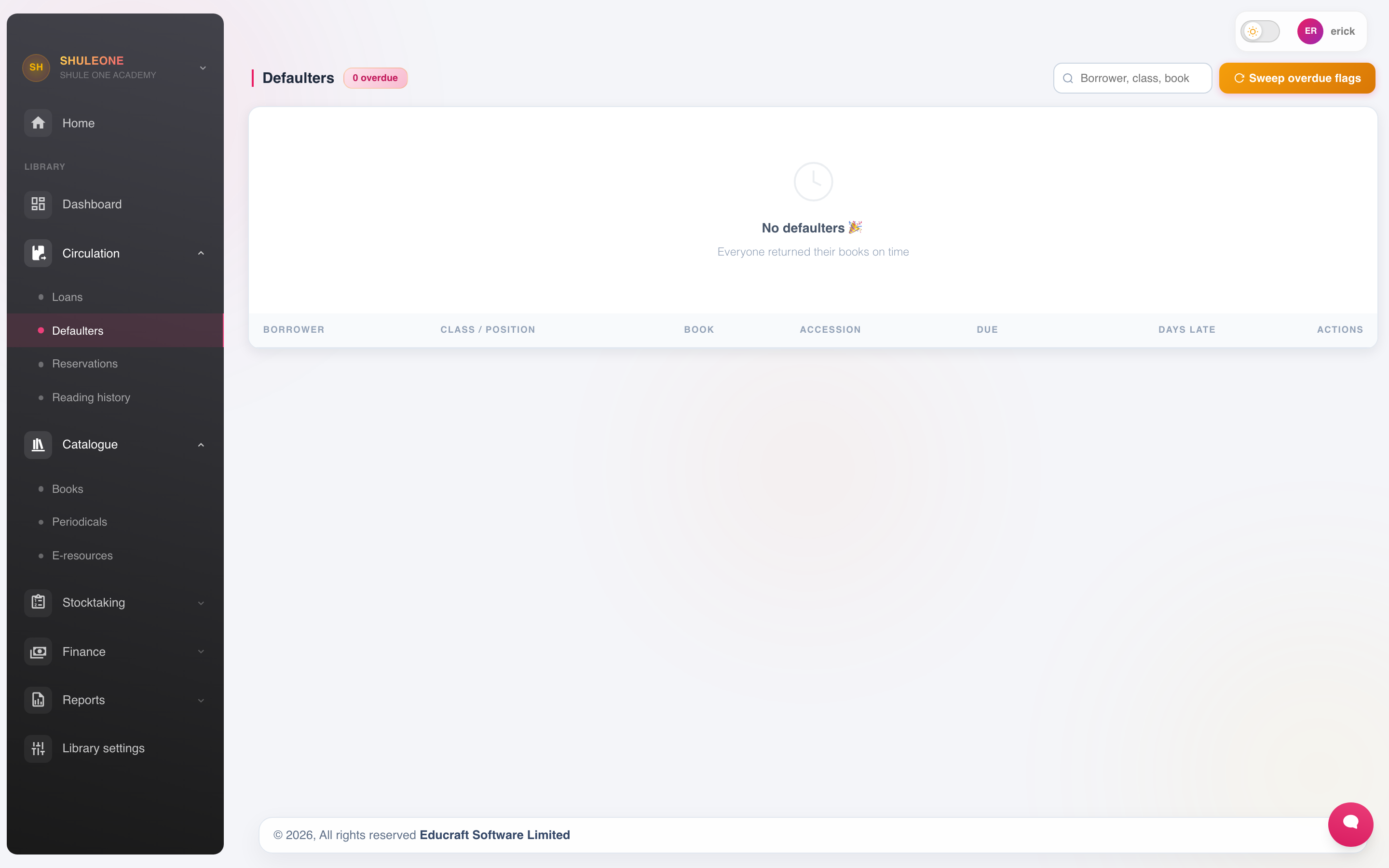
Work it weekly, not at the end of term. A book a week overdue usually comes back after a reminder; a book a term overdue usually does not.
The list can be filtered by class, which makes it practical to hand a class teacher the five names in their class rather than a school-wide list nobody owns.
Library → Fines shows charges raised and their status.
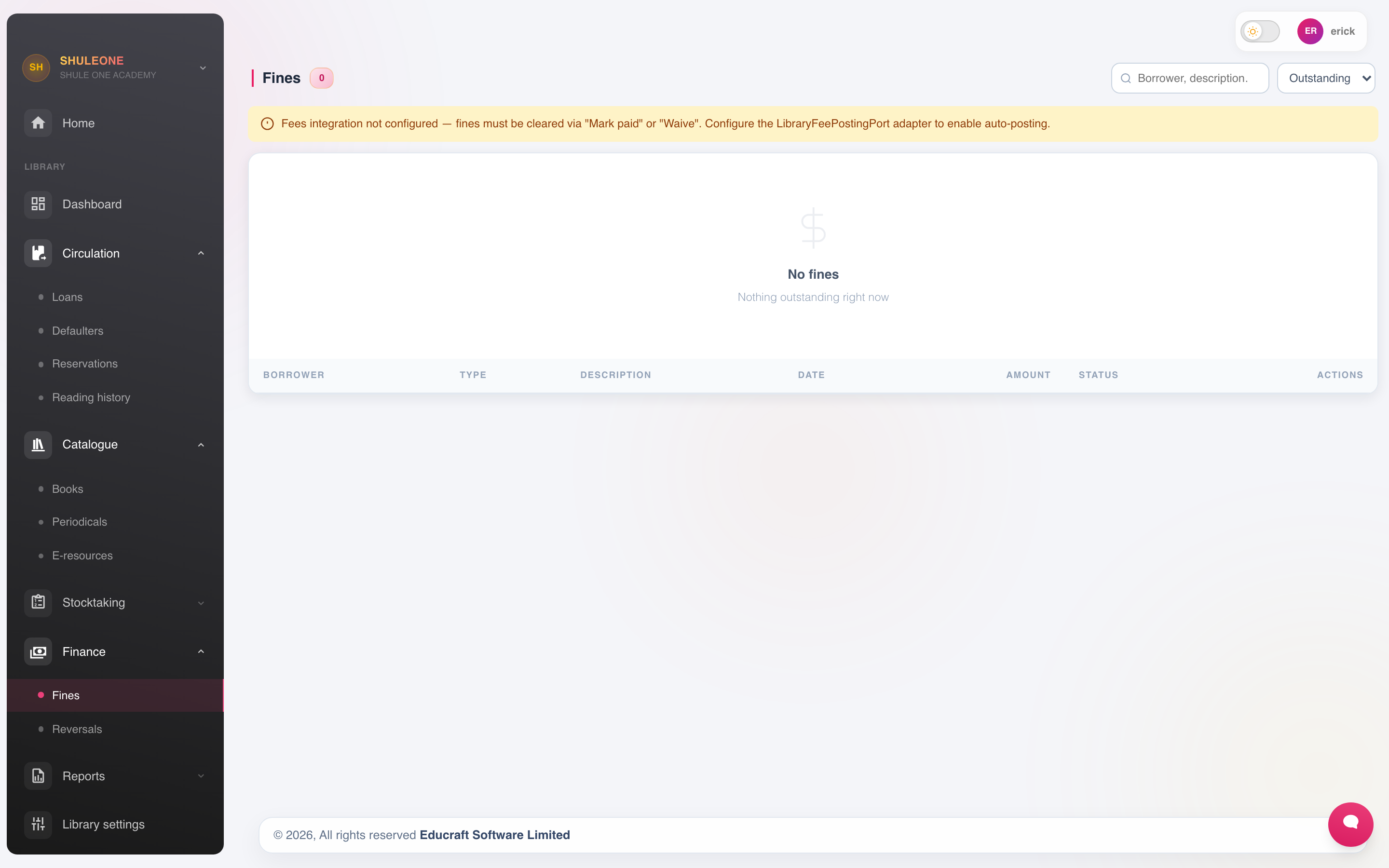
Fines are calculated on return, or accrue while an item is out, according to the rate and cap in settings. Each fine can be:
- Paid — record the payment and issue a receipt.
- Waived — with a reason and an approval. Waivers should be visible and occasional; a library where most fines are waived has no fines.
- Converted — where a lost book is charged at replacement cost instead of an accumulating daily fine, which is usually the fairer outcome.
Lost books
Section titled “Lost books”When a book is not coming back:
- Confirm it is genuinely lost rather than mis-shelved — check the inventory count first.
- Charge the borrower the replacement cost, or accept a replacement copy.
- Withdraw the copy from the catalogue with the reason recorded.
- Order a replacement if the title is still needed.
Reports
Section titled “Reports”Library → Reports covers both the collection and its use.
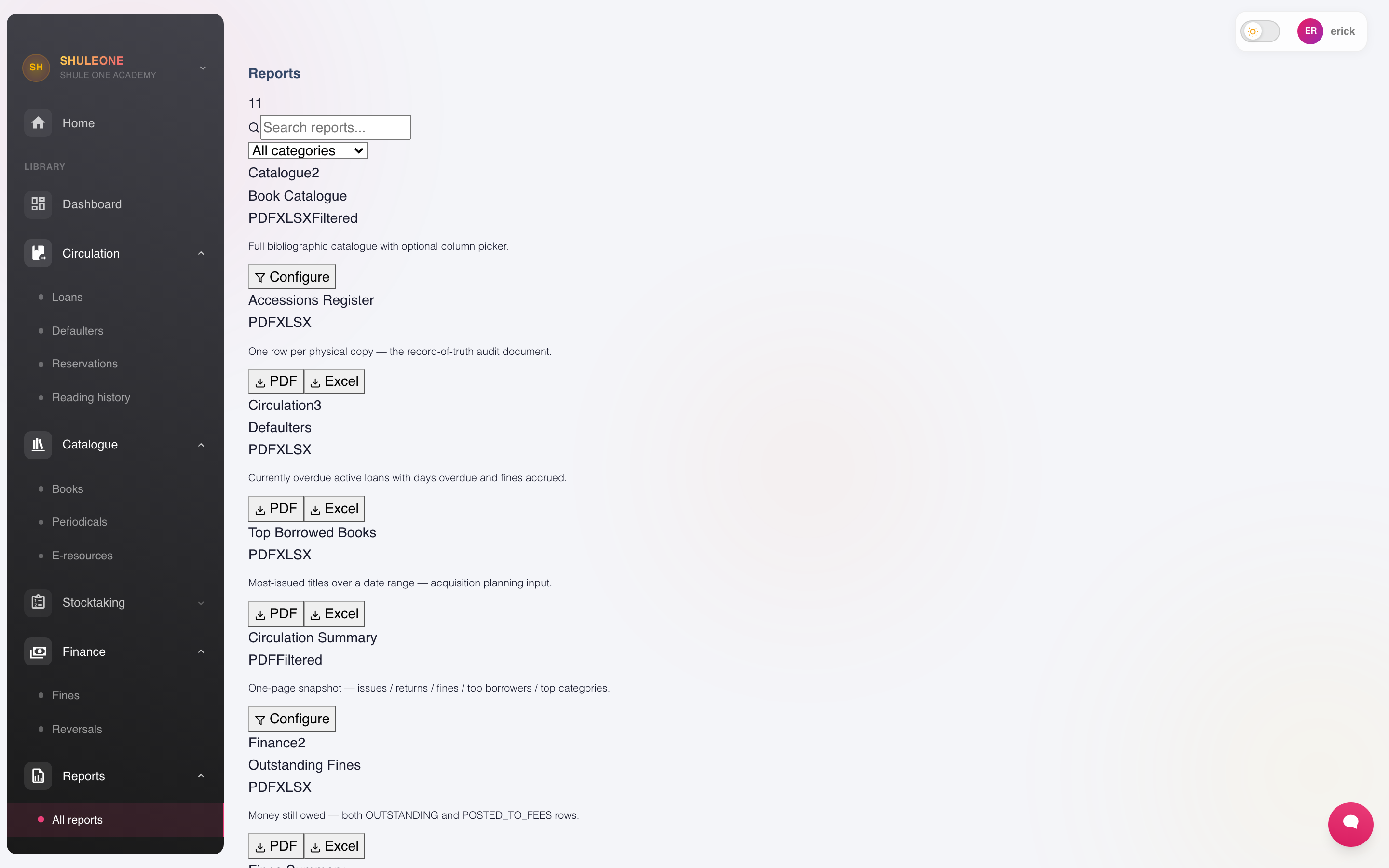
Circulation — loans over a period, by class, by borrower type, by genre. This tells you whether the library is used, and by whom. A collection with high stock and low circulation is a different problem from one with high circulation and constant overdues.
Collection — what the library holds, by genre and condition. Read it against circulation: the genre everyone borrows and the genre with the most copies are often not the same, which is the argument for the next book order.
Overdue and fines — what is out, what is owed, what has been collected and waived.
Reading history — aggregated, this shows what the school actually reads. It is worth sharing with heads of department; it is often the only hard evidence of whether a set text is being read.
Every report exports to PDF and Excel.