
Quizzes, self-tests and online exams
Quizzes
Section titled “Quizzes”E-learning → Quizzes holds short, auto-marked question sets. They are listed as active, pending and completed.
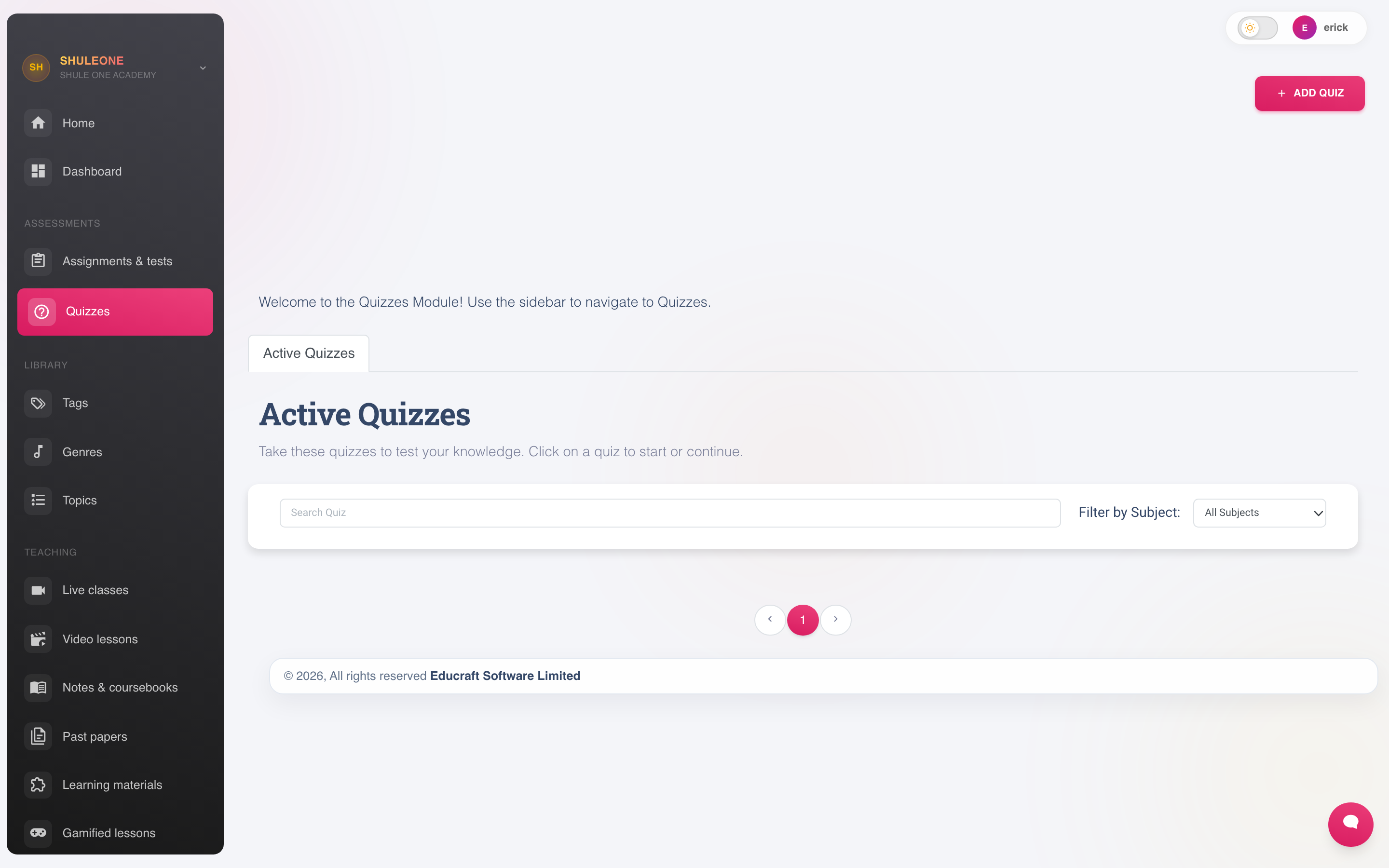
A quiz is quicker to set than an assignment and is meant for frequent, low-stakes checking — the ten questions at the end of a topic that tell you whether to move on.
Create the quiz, add its questions with their correct answers, set the class and the window it is open for, and activate it. Students see their score immediately on submission, and the teacher sees the class breakdown.
Self-tests
Section titled “Self-tests”E-learning → Self-tests are for the student rather than the teacher: practice sets a learner takes on their own, as often as they like, with immediate feedback.
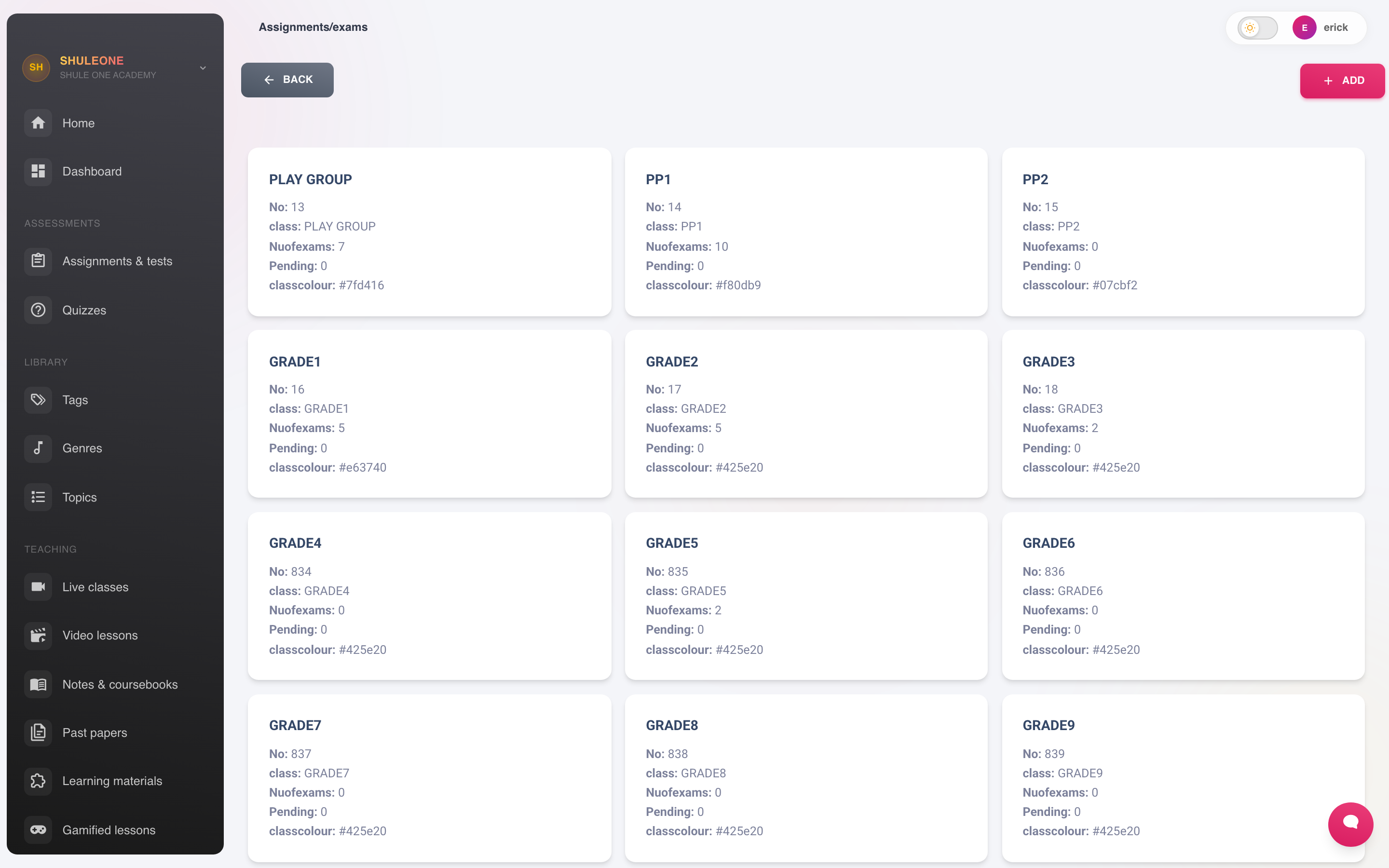
Nothing is reported to the teacher as a mark. That is the point — a student who knows their score is being recorded practises differently from one who does not.
Build self-tests from the topics students find hardest, and from past paper questions.
Online exams
Section titled “Online exams”E-learning → Exams is for formal assessment taken online, with a question bank behind it.
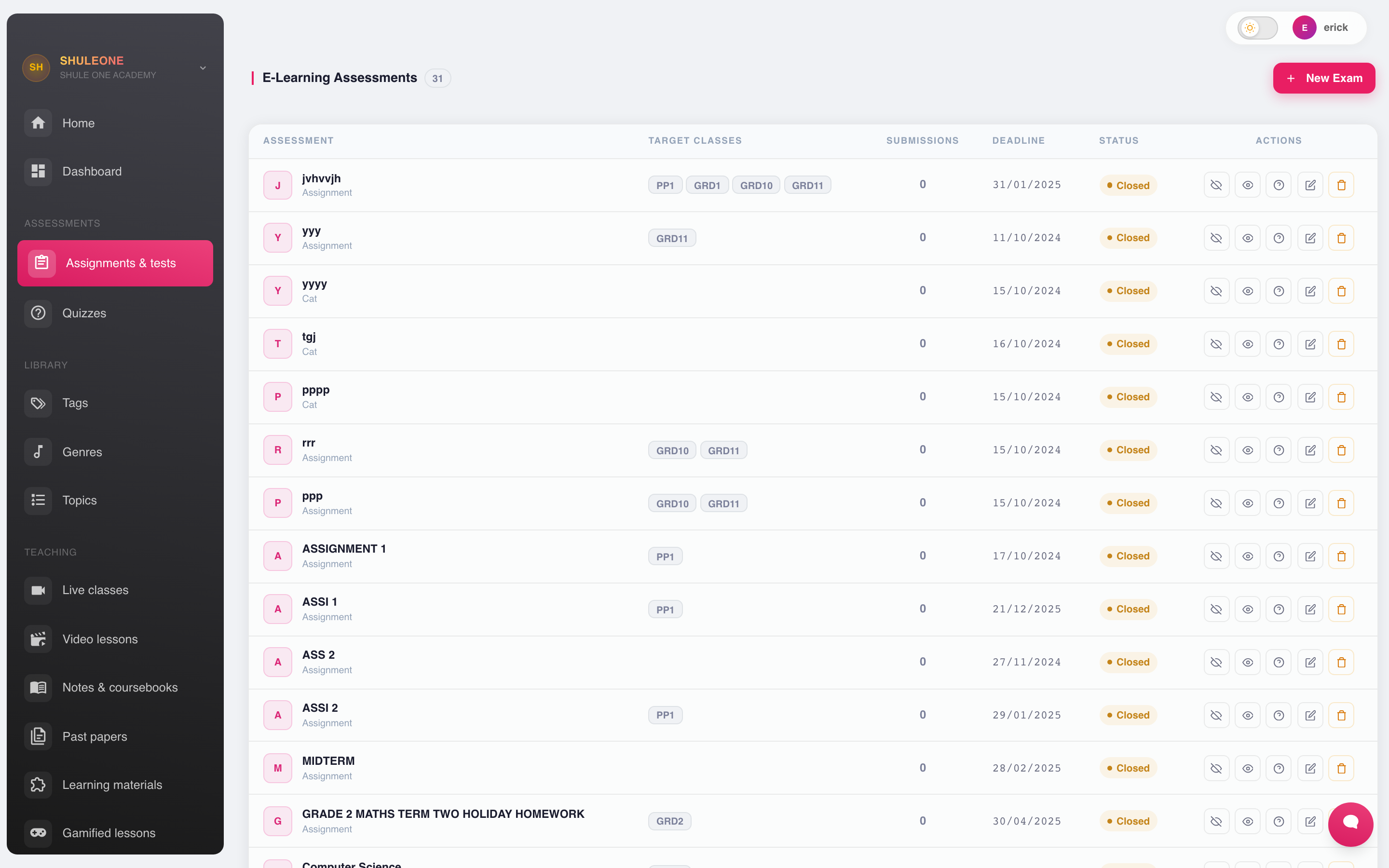
Manage Questions builds the bank for an exam: questions with their marks, correct answers and, where useful, the topic they test. A well-tagged bank can be reused across years, which is what makes the initial effort worthwhile.
An online exam needs more care than a quiz:
- Set the window tightly. Start time, end time, and the duration a student has once they begin.
- Decide on question order. Randomising the order makes copying harder in a room where screens are visible to each other.
- Check the infrastructure before the day. Enough devices, a network that will hold, and a plan for a student whose device fails mid-paper.
- Brief the students. How to start, what happens if they lose connection, how to submit.
Results and analytics
Section titled “Results and analytics”Quizzes and exams report the score distribution and the performance per question.
Read the per-question figures rather than only the average. They distinguish between a class that has not understood a topic and a question that was ambiguous, and those need opposite responses.
For coding exams specifically, the analytics live in the coding module.